Violet wands are far more than simple tools; they are keys to an entire landscape of sensation. At their most basic, they use high-voltage, low-current electricity to turn a simple touch into a chorus of nerves firing at once. But when you move beyond the surface, you realize these devices are not just about the wand—they are about the entire circuit you choose to build. Whether you are seeking a gentle, buzzing tingle or a deep, humming resonance, the experience is limited only by your imagination and the conductive paths you create.
The anatomy of the experience
Understanding the wand is the entry point, but the “fun” is found in the way electricity behaves once it leaves the glass.
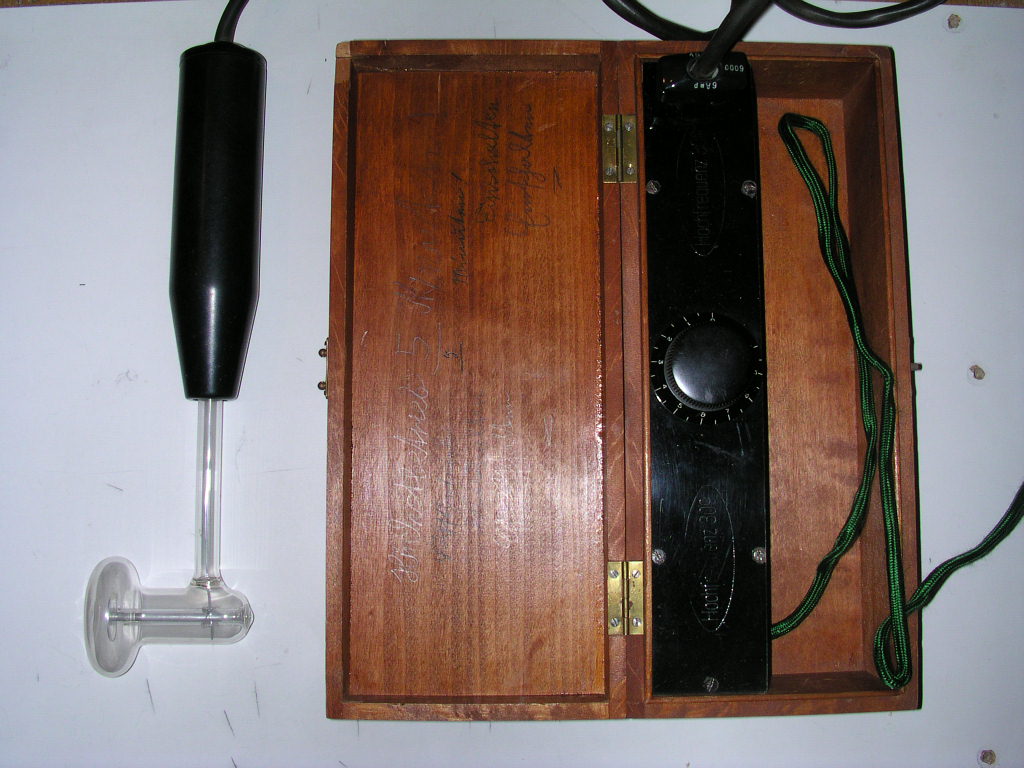
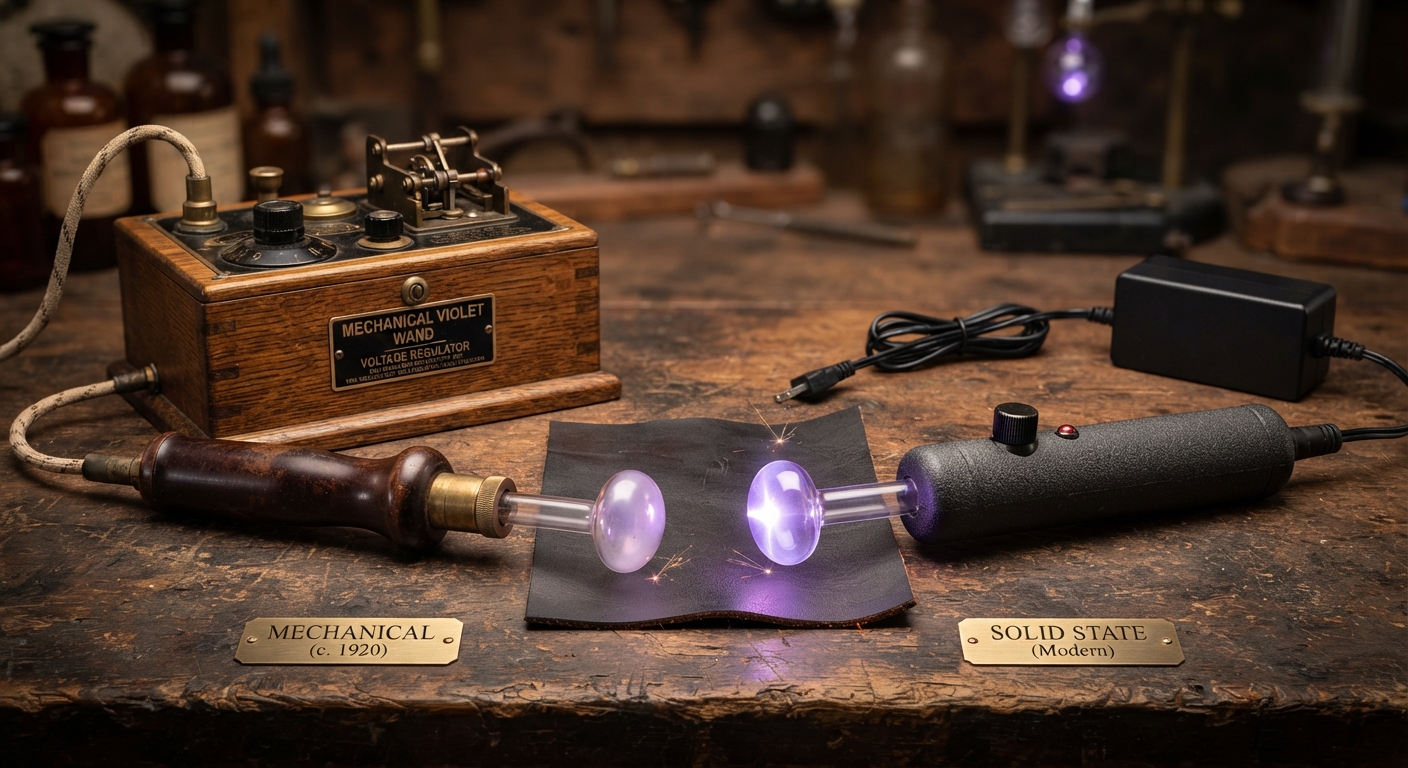
- The Power Source: Whether you choose a solid-state or mechanical wand, you are essentially managing an electrical current. Solid-state wands are electronic and consistent; mechanical wands use traditional coils to create a deeper, more variable resonance.
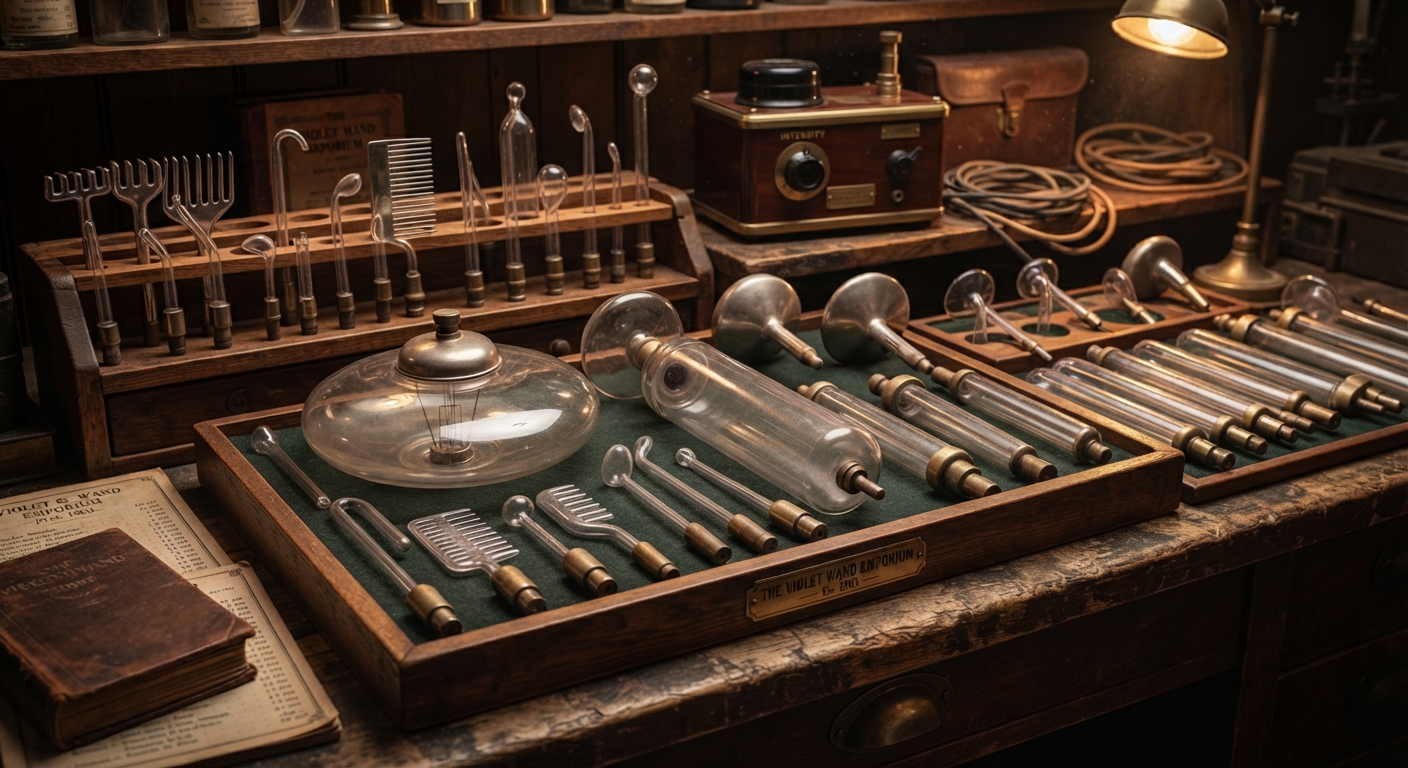
- The Attachment Variable: The electrode is your translator. A glass mushroom creates a broad, diffuse fizz; a metal point concentrates the energy; a “demon nail” creates a sharp, focused strike.
- The Body Contact Electrode: The Core of the Kit. While glass electrodes and various store-bought attachments are common entry points, they are merely an appetizer for the true potential of electrical play: the body contact electrode. Any kit that lacks this component is fundamentally incomplete, regardless of whether you’re running a state-of-the-art solid-state device or a top-tier Tesla (mechanical) wand. The body contact cable shifts the entire paradigm of the experience — it doesn’t require electricity to travel directly from the wand to the skin; instead, by grounding the device to your own body or a partner’s, you turn your hands, your touch, and your presence into the primary electrode. This moves the play away from “doing it to someone” and toward a shared, interconnected circuit where the electricity flows through the human connection itself.
Arcing vs. Direct Contact
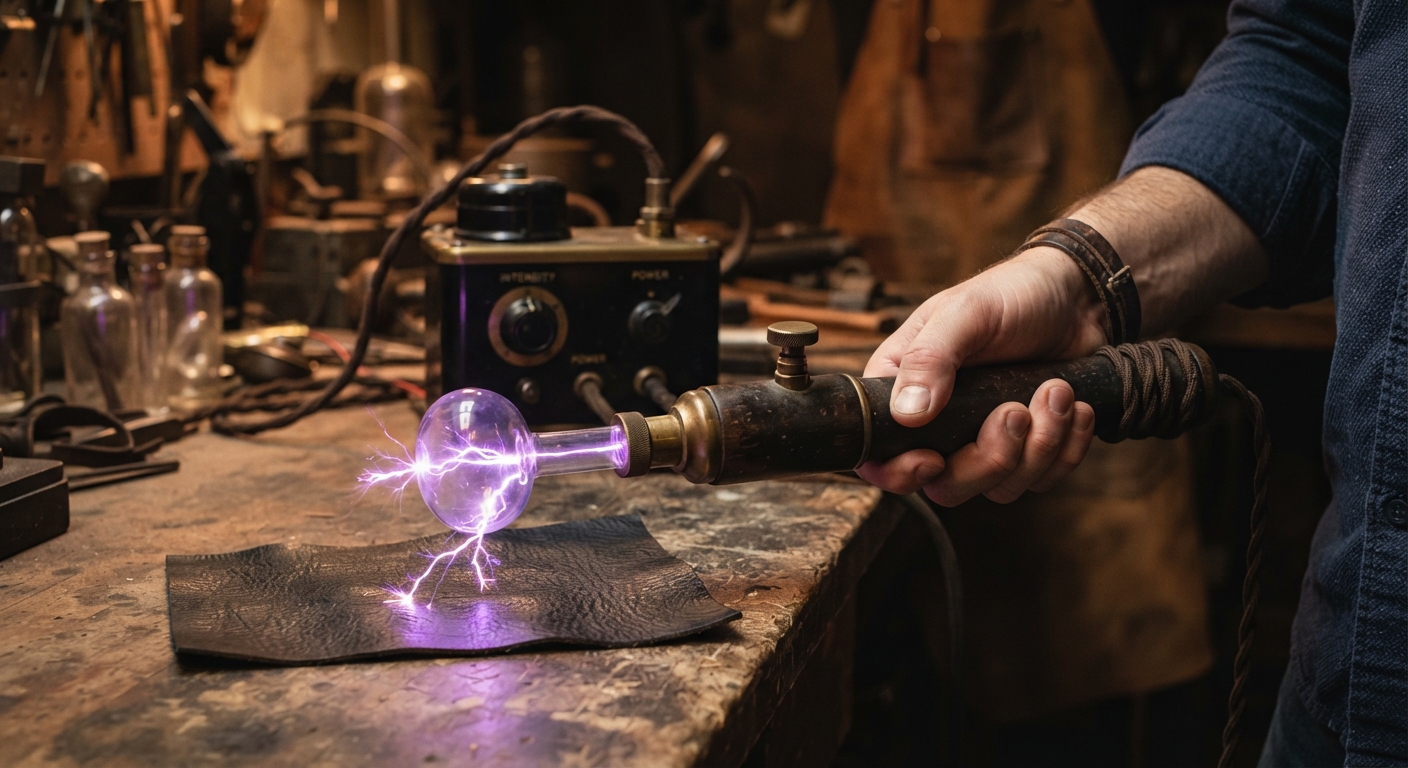
There are two basic ways the current reaches the skin, and they feel genuinely different. Hold the electrode a hair’s width off the skin and the current has to jump the gap — that’s an arc: the visible violet spark, the crackle, a sharper, stingier bite concentrated at one point. Rest the electrode flush against the skin and there’s no gap to jump — current flows straight through, giving a steadier, more diffuse buzz or hum instead of a spark. Most play moves between the two, and each is worth exploring on its own.
The steel glove trick
A couple of notes from my own time with the violet wand. Like most people getting familiar with this kind of play, I ordered my first kit and quickly realized something was missing — what I consider the single most critical component for genuinely exciting, satisfying play: the body contact electrode.
This one attachment turns a neat trick into one of the coolest party tricks you’ll pull out, kinky crowd or not. As covered above, the body contact electrode electrifies the user, not the subject — which makes the experience genuinely interactive for both top and bottom. If you’re a top who enjoys being electrified yourself, you’ve found your new thrill. If, like me, you spent years working a trade where getting shocked was an occupational hazard, prepare to suffer right alongside your bottom.
Which brings me to what I consider the second essential violet wand tool: a stainless steel butcher’s glove. These run a few dollars on your favorite online marketplace and let a top deliver a full range of sensations with little to no shock to themselves — perfect for the non-masochistic top who still wants to give a memorable experience.
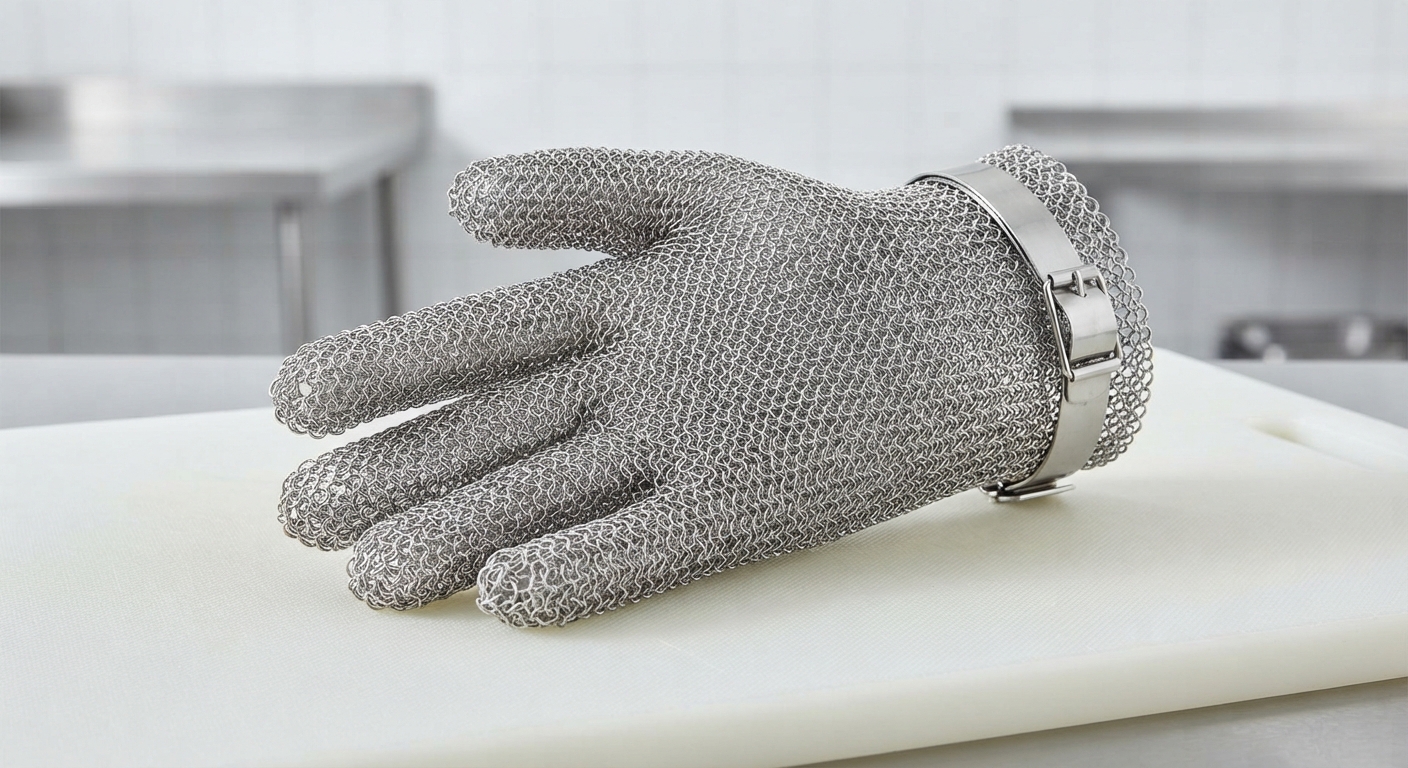
A few notes on using one: start at the lowest setting and be ready for some genuine oohs and ahs from your bottom. The stainless steel can feel a bit scratchy, but since close proximity to the skin is generally what you’re after, there’s no need to actually rub the glove — or any electrified toy — directly against the skin.
Pro tip: buy two gloves. If your bottom starts to squirm, resting your bare hand on them to hold them still will just get you shocked — and won’t actually keep them still. Just saying.
The world of conductive play
Once you grasp the concept of the body contact cable, you can turn nearly anything conductive into an extension of the wand.
- Conductive Silicone: A staple of modern electrical play. Unlike glass or metal, conductive silicone is soft, flexible, and moves with the body. It lets you use familiar, comfortable toys — like massagers or probes — and “charge” them, delivering the sensation through the shape and texture of the toy itself.
- Pervertible Tools: The range of “toys” is limited only by what can conduct.
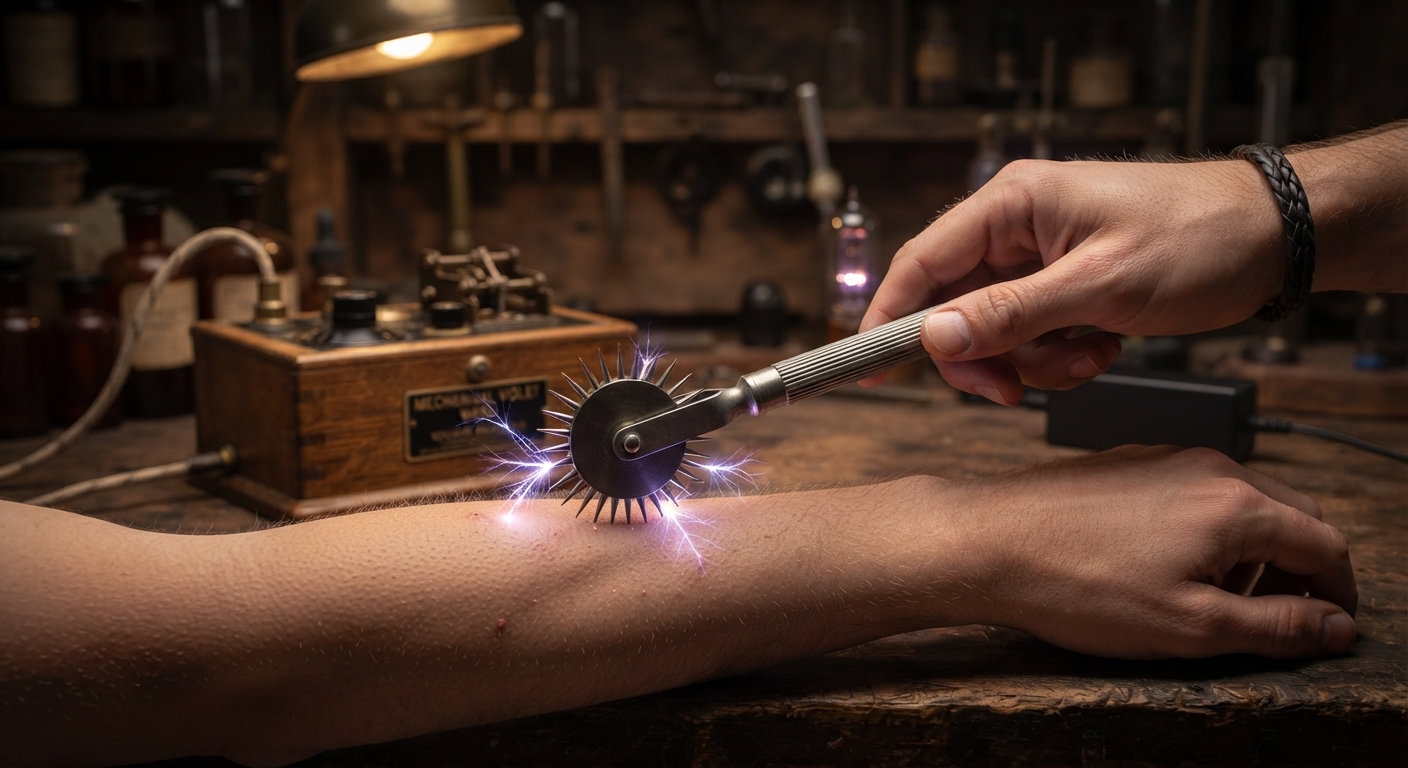
- Wurttemberg Wheels: A rolling, rhythmic sensory dimension that changes as they move across the skin.
- Massagers: A standard vibrator or massager, integrated into the circuit, adds a layer of vibration to the electrical hum, creating a complex, multi-layered sensation.
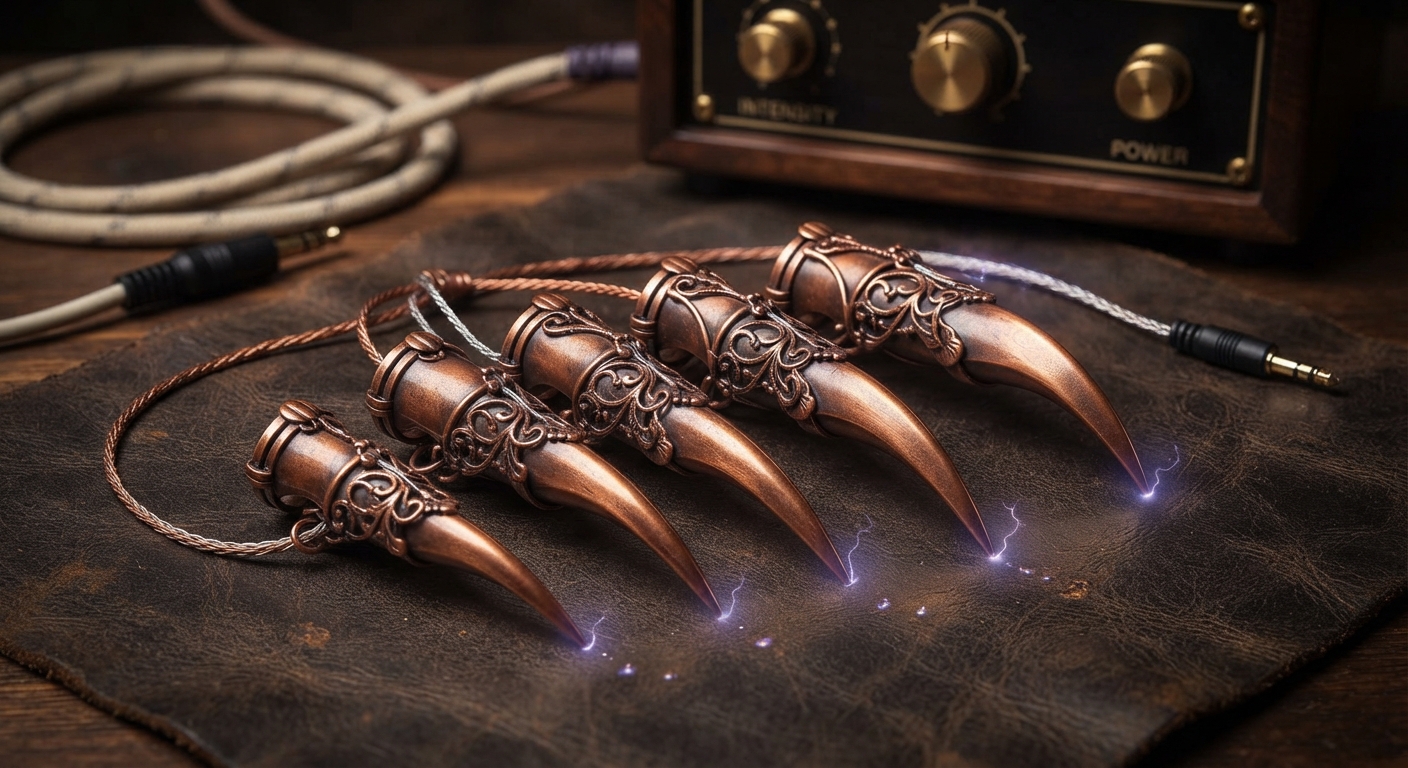
- Demon Nails & Metal Points: For those who enjoy a more precise, singular focus of energy.
Electrical sensitivity: a unique blueprint
One of the most important things to internalize is that every body conducts electricity differently.
There is no “standard” level of comfort. What feels like a gentle, pleasant hum to one person may produce an overwhelming sensation in another. Crucially, this reaction has nothing to do with pain tolerance — it is a purely biological response to how one’s individual nervous system perceives the stimulus.
Always err on the side of caution. Start at the absolute lowest setting and test the sensation on yourself. Communication is not just a suggestion; it is the most vital part of the protocol. Every sensation — from the lightest tingle to the most intense, deep buzz — is equally valid, novel, and desired. The goal is to explore the spectrum, not to reach a specific intensity.
Safety fundamentals
Electrical play requires a disciplined, grounded approach. Respect the hardware and the body to keep the experience safe:
- Medical Contraindications: If you use a pacemaker, an insulin pump, or any other implanted medical device, do not use a violet wand. The electrical interference can cause these devices to malfunction.
- The Heart and Nervous System: Avoid directing current across the chest or near the heart. Keep play localized, away from eyes, ears, or mucous membranes.
- Dry Environments: Keep your space dry. Moisture is a conductor, and even a small amount of sweat or humidity changes how the electricity behaves, making the sensation erratic.
- Skin Integrity: Only play on healthy, unbroken skin. Avoid rashes, wounds, or recent piercings.
- Inspection: Before every session, check your glass electrodes for hairline cracks. Even a small fissure can cause the glass to heat up or spark unpredictably. Replace any damaged gear immediately.
- The Smell: Frequent arcing produces a faint ozone smell — that sharp “electrical” scent. It’s a normal byproduct, not a sign of a problem, but a strong or sudden burning smell (as opposed to ozone) means stop and inspect your gear immediately.
The first session: calibration
Before involving a partner, spend time with the device alone. Use your forearm as a testing ground. Adjust the power dial slowly, observing how the sensation shifts as you move the electrode closer to or further from the skin — and notice how it changes as you shift between arcing and direct contact.
You aren’t just learning to use a tool; you’re learning to listen to the feedback of the body. Once you understand the range of your device and your own unique responses, you’ll be much better equipped to guide someone else through the flood of sensations.
— Field notes from the SafeSpace Allies community